More than half of Venezuelan workers surveyed in a 2025 Universidad Central de Venezuela study reported experiencing moderate to severe work-related stress — and the majority of them had never spoken to a supervisor about it. The gap between what employees are legally entitled to and what they actually access sits at the center of a quiet mental health crisis unfolding in offices, warehouses, and call centers across the capital.
The timing matters. Global conversation around hormones, burnout, and occupational health has intensified in 2026, with researchers in Europe and Latin America alike documenting the long-term physical toll of chronic workplace anxiety. In Caracas, where a punishing commute culture — average transit times in Petare and El Valle regularly exceed 90 minutes each way — compounds already stretched household budgets, the daily load on workers is measurable and real. Venezuela's Ley Orgánica de Prevención, Condiciones y Medio Ambiente de Trabajo, known as LOPCYMAT, has since 2005 required employers with more than 20 staff to form a Joint Committee on Health and Safety, called a Delegado de Prevención. Most workers have never heard the term.
What the Law Actually Gives You
LOPCYMAT is more specific than its reputation suggests. Article 56 obligates employers to maintain conditions that protect psychological health, not just physical safety. Workers who develop anxiety disorders or depression directly attributable to job conditions — documented by a physician — can file a claim with the Instituto Nacional de Prevención, Salud y Seguridad Laborales, INPSASEL, whose Caracas regional office operates out of La Candelaria, on Avenida Fuerzas Armadas. Filing is free. A formal INPSASEL inspection can result in sanctions against an employer and, in documented cases of severe psychological harm, compensation proceedings through the labor courts in Parque Central.
The practical reality is that many workers in the informal sector, which the Banco Central de Venezuela estimated at roughly 47 percent of the urban workforce in late 2024, fall outside these protections. For them, the path runs through civil society and community health infrastructure rather than the state.
Local Resources Worth Knowing
In Chacao, the Centro Comunitario de Salud Mental de Chacao on Avenida Francisco de Miranda has operated sliding-scale psychological consultations since 2019. Sessions start at the equivalent of $3 USD for low-income residents and are conducted by licensed psychologists, several of whom specialize in occupational stress and burnout. Appointments book out three to four weeks in advance, so planning ahead is not optional — it is necessary.
Across the city in Los Palos Grandes, the nonprofit Fundación Aulas de Paz runs a workplace wellbeing program that partners with small and medium businesses to deliver group stress-management workshops. Their eight-session curriculum, last updated in March 2026, covers breathing regulation, cognitive reframing techniques, and assertive communication for conflict at work. The program is free for participating companies and their staff.
For immediate support, the Línea de Apoyo Emocional de Venezuela, reachable at 0800-SALUD-00, operates Monday through Saturday from 7 a.m. to 10 p.m. The line is staffed by trained counselors and is not a crisis hotline in the narrow sense — it handles everyday stress, relationship difficulties at work, and referral guidance equally well.
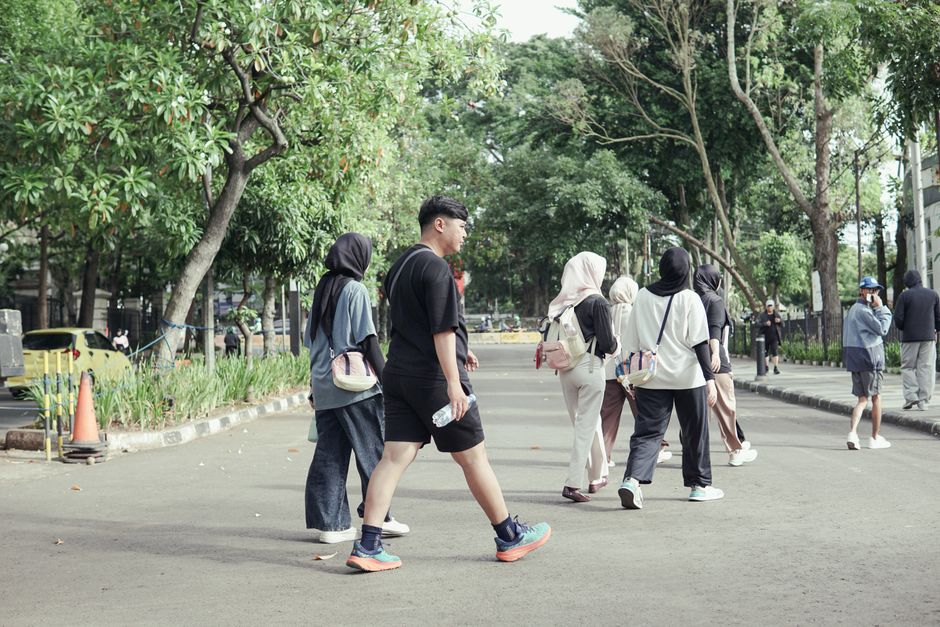
Occupational health professionals suggest three entry-level habits that cost nothing: a consistent sleep schedule, physical movement of at least 20 minutes daily — the Parque del Este in Dos Caminos draws early-morning walkers precisely for this reason — and what psychologists call "boundaries articulation," meaning workers explicitly naming their working hours in writing to supervisors rather than leaving expectations vague. None of these replace professional care, but all three reduce the biological stress load before it compounds.
Anyone experiencing persistent low mood, sleep disruption, or physical symptoms they associate with work pressure should consult a licensed health professional directly. The resources above are starting points, not diagnoses. Knowing your rights under LOPCYMAT, then finding one local organization to connect with, is a practical two-step that most Caracas workers can complete before the end of this month.