Wellness
Step by Step: How to Start a Walking Group in Your Neighbourhood
Caracas has the hills, the parks, and the people — here's how to turn a solo habit into a community movement.
4 min read
Wellness
Caracas has the hills, the parks, and the people — here's how to turn a solo habit into a community movement.
4 min read
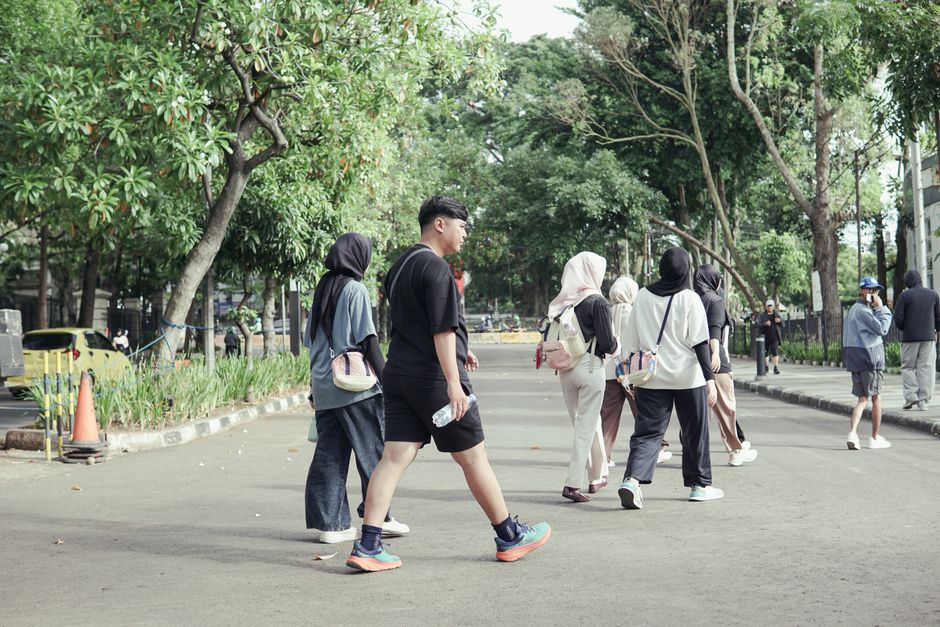
The fastest-growing fitness trend in Caracas right now costs nothing, requires no gym membership, and can start with a WhatsApp message to six neighbours. Walking groups — organised, recurring, neighbourhood-based — are multiplying across the city's eastern parishes, and fitness coordinators say demand for structured outdoor activity has jumped sharply since early 2026, driven in part by rising personal training costs and a renewed appetite for social connection after years of economic disruption.
This matters now because Caracas is already primed for it. The city sits at roughly 900 metres above sea level, and its varied terrain — from the flat stretches of La Floresta to the steep inclines climbing toward El Ávila — offers walkers of every fitness level a natural circuit. The Parque Nacional El Ávila, formally known as Parque Nacional Waraira Repano, draws thousands of caraqueños every weekend. The question is no longer whether people want to walk. It is whether those informal, solo efforts can be converted into something more structured, more accountable, and more lasting.
Two locations dominate the city's existing outdoor fitness culture. The first is Parque del Este — officially the Parque Generalísimo Francisco de Miranda in Sucre municipality — where runners and walkers circle the 1.2-kilometre inner loop from as early as 5:30 a.m. on weekdays. The second is the Paseo Los Ilustres in Los Caobos, a tree-lined avenue that functions as an informal outdoor gym most mornings, populated by retirees doing laps, parents with strollers, and young professionals squeezing in movement before the traffic thickens. Both locations already carry a communal energy. A walking group does not need to import that spirit — it just needs to formalise it.
Starting one requires less infrastructure than most people expect. Community fitness organizers working with the Caracas-based nonprofit Red de Espacios Activos, which has been coordinating neighbourhood sport initiatives in parishes including Chacao and Baruta since 2019, recommend a founding group of no fewer than four people and no more than twelve for a first outing. Smaller than four and cancellations kill momentum. Larger than twelve and pace mismatches fracture the group within three weeks. The meeting point should be fixed, publicly identifiable, and reachable by metro or por puesto — the corner outside the Altamira metro exit on Francisco de Miranda Avenue, for instance, works well for groups drawing from multiple eastern neighbourhoods.
The evidence for walking as a primary health intervention has hardened considerably. The World Health Organization's 2022 Global Action Plan on Physical Activity set a target of reducing physical inactivity by 15 percent globally by 2030, citing walking as the single most accessible lever for populations in middle-income urban settings. Closer to home, a 2024 survey conducted by Venezuela's Universidad Central de Caracas public health faculty found that 68 percent of respondents in the Libertador and Sucre municipalities reported they would exercise more frequently if they had a regular social group to join. The barrier is not motivation. It is structure.
A basic walking group needs three things decided before the first outing: a fixed day and time (Saturday at 7 a.m. is the most common successful slot in Caracas, according to Red de Espacios Activos coordinators), a clear distance or duration rather than a vague "we'll see how it goes," and a communication channel that is not abandoned after week two. A dedicated WhatsApp group with a simple name — Caminantes de La Castellana, or Paso a Paso Chacao — creates identity and accountability. Set a walk of 45 to 60 minutes for early sessions. That is achievable for almost everyone and long enough to feel worth the effort.
Registration costs nothing. No insurance is required for public-space group walking under Venezuelan law, though groups larger than 20 people using Parque del Este's main circuits are encouraged to notify the park administration at their Calle Sorbona entrance office to avoid congestion conflicts on busy weekend mornings. Keep a rotating leader to vary routes. Check in with a local physician or your nearest ambulatorio before committing to steep Ávila trails if you have cardiovascular concerns. The group handles the motivation. The medicine handles the rest.

Wellness
Wellness

Wellness

Wellness
About this article
Published by The Daily Caracas
Spread the word
Daily brief
Free, in your inbox before 7am. Weekdays.
The Daily Network — local news across Australia