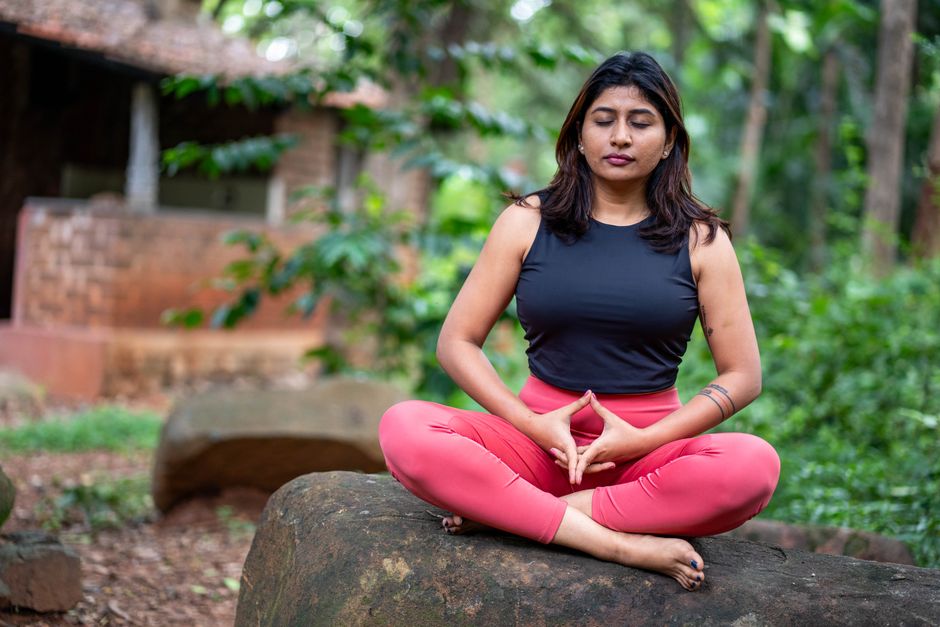
Tens of thousands of caraqueños walk every day out of necessity — to catch the metro at Chacaíto, to cut through Parque del Este, to navigate the steep sidewalks of Altamira. Very few of them know they are one mental shift away from a formal mindfulness practice that neurologists and psychologists have been recommending with growing urgency since at least 2020.
Walking meditation — the deliberate act of treating each step as an object of conscious attention — is gaining serious traction in Latin American wellness circles. The reasons are practical. Gym memberships at Caracas fitness chains likeBodyTech in Las Mercedes run between 80 and 120 dollars a month at current parallel exchange rates, a sum that prices out a significant portion of the population. Walking costs nothing. And the city's topography, from the flat loop around the Jardín Botánico de la UCV to the ridge trails above El Hatillo, offers conditions that meditation teachers elsewhere would design from scratch.
What walking meditation actually requires
The practice is structurally simple. You slow your pace by roughly 30 percent, direct your full attention to the physical sensation of each foot making and leaving contact with the ground, and — when your mind wanders to your WhatsApp messages or your electricity bill — you gently return focus to that point of contact. That cycle of wandering and returning is not a failure. It is the exercise itself.
Research published in the journal Mindfulness in January 2024 found that participants who practised slow-paced walking meditation for 20 minutes, three times a week, reported a 27 percent reduction in self-reported stress scores after eight weeks, comparable to gains seen in seated meditation groups. The walking group, however, showed stronger adherence rates — 84 percent versus 67 percent — likely because integrating movement into an existing routine creates less friction than carving out time to sit still.
In Caracas, the Centro de Psicología y Bienestar Integral on Avenida Francisco de Miranda in Chacao has been running structured mindfulness programs since 2022, including outdoor walking components in nearby Parque Generalísimo Francisco de Miranda, commonly called Parque Miranda. Their eight-week course — loosely modelled on the Mindfulness-Based Stress Reduction protocol developed at the University of Massachusetts in 1979 — costs around 40 dollars for the full programme, with sliding-scale options. The Federación Venezolana de Yoga, which maintains a directory of certified instructors across the city, lists several practitioners in Baruta and El Cafetal who incorporate kinetic mindfulness into group sessions held on weekend mornings.
Making the commute count
You do not need to enroll in anything. The walk between the Sabana Grande metro station and Plaza Venezuela — roughly 900 metres along the boulevard — is long enough for a complete 15-minute session if you start at the station exit and commit to the practice before your first step onto the pedestrian strip.
The technique works in segments. Spend the first five minutes on pure sensation: the weight shift from heel to ball of foot, the slight give of a cracked tile, the temperature of air on your forearms. The next five minutes can include peripheral vision — notice three things you have never registered before on a route you walk weekly. The final segment is breath-anchored: four counts in, four counts out, feet still keeping rhythm. By the time you reach the CONAC cultural complex near the plaza, you have completed what most formal programmes classify as a full session.
The broader hormone and stress-science conversation happening globally in mid-2026 — around cortisol dysregulation, sleep disruption and the cascading effects of chronic urban anxiety — gives this practice sharper relevance. Cortisol, the body's primary stress hormone, drops measurably with rhythmic movement combined with attentional focus. No prescription required.
Start tomorrow. Pick one regular walk — to the panadería, to the nearest metro, through Los Palos Grandes on a Sunday — and treat it not as transit but as the practice itself. Anyone with specific health concerns, including anxiety disorders or chronic pain that affects gait, should speak with a licenciado en psicología or médico internista before adapting their routine.